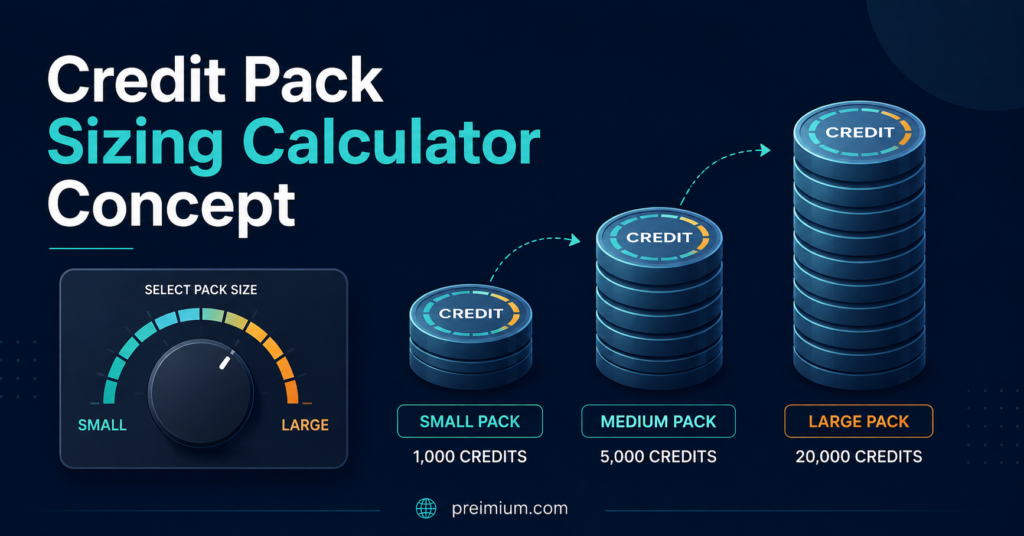
How many IPTV credits should I buy for a first order? Base it on the number of paying customers you can realistically sign up over the next month or two, plus a small trial buffer, rather than on whichever pack advertises the lowest price per credit. Buy too few and you’re placing top up orders every few days. Buy too many and you’ve tied up cash in a balance that sits unused for months.
Why Getting Your Credit Number Wrong Costs More Than You’d Think
New UK IPTV resellers tend to make this decision based on price alone. A bigger pack looks like the smarter buy because the cost per credit drops, so it feels wasteful to choose anything smaller. That logic only holds if the credits actually get used within a reasonable window.
Credits that sit unused aren’t losing you money directly, since most panels don’t expire them, but they do represent cash that’s no longer working for you. If you’ve spent £300 on a large pack and only activated fifteen customers after two months, that money could have covered stock elsewhere in your business or simply stayed in your account until you had firmer demand. The opposite mistake is just as common. Resellers who order too cautiously end up topping up every few days, which adds admin time and, on some panels, means paying at a slightly worse rate than they would have on a mid-sized pack.
How Many IPTV Credits Should I Buy
There’s no single number that fits every reseller, because it depends on how many customers you already have, how long their typical subscription runs, and how quickly you expect to add more. What does hold true across almost every case is that your first order should match your near-term reality rather than your ambitions. If you have five confirmed customers and a handful of trial requests, ordering enough credits for fifty subscriptions doesn’t accelerate your growth. It just moves cash out of your pocket earlier than necessary.
A workable starting rule: order enough credits to cover your current confirmed or highly likely customers on their expected plan length, add a small buffer of two to four credits for trials and conversions, and stop there. You can always browse the available credit packs again next week once you have a clearer read on demand.
What One Credit Actually Buys You
On a standard credit-based panel, one credit typically activates one month of subscription for one customer. A twelve month subscription for a single customer uses twelve credits from your balance, not one. This is where a lot of first-time resellers miscalculate, because they think in terms of customers rather than months of service.
If three of your customers want annual plans and two want monthly rolling access, you’re not looking at five credits. You’re looking closer to forty, since the annual customers alone account for thirty-six. Before placing an order, it helps to map out exactly which plan lengths your customers actually want rather than assuming everyone will take the same term. Checking your reseller panel’s subscription options before you buy avoids the common mistake of ordering for the wrong mix.
Pro tip: Keep a simple running note of confirmed customers against their plan length before every top up. It takes two minutes and stops the “how many credits do I actually need” question from becoming guesswork each time.
The Three Numbers That Actually Decide Your Order Size
Three figures matter more than anything else when you’re deciding on a pack size.
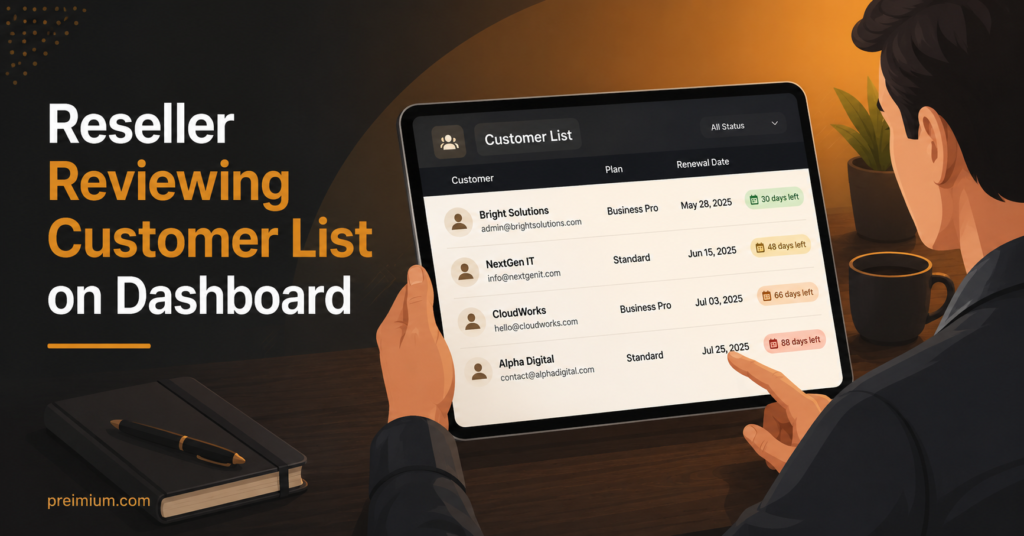
Your confirmed customer count comes first. This is not your total leads or people who’ve asked about a trial, but people who have paid or clearly committed to paying. Your plan length mix comes second, since a base of mostly annual customers needs a far larger credit balance than the same number of monthly customers. Your realistic conversion rate from trials comes third. If roughly one in three trials becomes a paying customer, and you’re running six trials this week, budgeting for two new activations is more accurate than budgeting for six.
Put those three together and the right pack size for most new resellers becomes a lot clearer than it first appears.
Worked Examples for Different Reseller Sizes
| Reseller type | Suggested starting order | Why this fits |
|---|---|---|
| Brand new, no customers yet | Around 20 to 30 credits | Enough to run several trials and onboard your first 15 to 20 monthly customers without a large amount of cash sitting idle |
| Side income, 10 to 15 existing customers | Around 60 to 90 credits | Covers a mix of monthly and quarterly renewals plus room for two or three new sign ups |
| Growing reseller, 40+ active customers | Sized to one full renewal cycle, often 150 credits or more | Cost per credit usually drops at this volume, and frequent small top ups become more admin than they’re worth |
| Sub-reseller under a parent account | Matched closely to confirmed orders only | Sub-resellers carry more risk if the parent relationship changes, so overbuying is riskier here than for a direct reseller |
Signs You Bought the Wrong Amount
You’ll usually know within the first few weeks whether your order size was right. If you’re placing top up orders more than once a week, your starting pack was probably too small for your actual pace of sign ups. If you’re still sitting on more than half your original balance after two or three months, it was likely too large, or your conversion estimate was too optimistic.
Neither situation is a disaster on its own. A panel with non-expiring credits means an oversized balance simply takes longer to use rather than going to waste, and a pack that runs out quickly just means your next order should be bigger. The mistake worth avoiding is repeating the same miscalculation order after order without adjusting.
Reseller and Sub-Reseller Credit Planning Differ
Direct resellers buying straight from a panel have full visibility over pricing, pack sizes and their own credit balance, which makes it relatively simple to plan a few months ahead. Sub-resellers working underneath a parent account are in a different position, since their access, pricing and sometimes their credit allocation depend on someone else’s arrangement with the main supplier.
If you’re operating as a sub-reseller, it’s generally sensible to order closer to your confirmed customer numbers rather than stocking up heavily in advance. Understanding what your customers’ devices actually need to run smoothly also matters here, because a sub-reseller absorbing support tickets for a parent’s technical issues has less room to recover from an oversized, underused credit purchase.
Pro tip: If you’re new to reselling, ask your supplier directly whether unused credits carry any conditions before committing to a large pack. Most panels don’t expire credits, but confirming this in writing before you buy avoids any surprises later.
Credit Purchase Checklist
- Count your confirmed, paying customers before you count leads or trial requests
- Map each customer to their actual plan length, not an assumed average
- Add a small trial buffer based on your genuine conversion rate, not a hopeful guess
- Check whether your reseller supports mixed plan lengths from a single credit balance
- Confirm your supplier’s credit expiry policy in writing before ordering
- Review your usage after two to three months and adjust your next order size accordingly
Pro tip: Set a recurring reminder to review your credit balance every fortnight rather than only when it’s about to run out. Reactive top ups tend to be smaller and more frequent, which usually costs more per credit over time.
Frequently Asked Questions
Do IPTV credits expire if I buy too many?
Most credit-based panels don’t put an expiry date on unused credits, so an oversized order isn’t wasted money, it’s simply cash that takes longer to convert into active subscriptions.
Is it cheaper to buy credits in bulk?
Larger packs typically bring the cost per credit down, but that saving only counts for something if you can realistically use the credits within a sensible timeframe. A discount on credits you don’t use for six months isn’t really a saving.
Can I mix monthly and annual subscriptions from the same credit balance?
Yes, on most panels a single credit balance can activate any plan length your panel supports. A monthly customer simply draws one credit at a time, while an annual customer draws twelve at once.
What happens if I run out of credits mid-month?
You won’t usually lose existing customer access, but you won’t be able to create new accounts or process new renewals until you top up, so it’s worth ordering before your balance gets critically low rather than after.
Should sub-resellers buy credits differently to direct resellers?
Generally yes. Sub-resellers depend on a parent account’s arrangement with the supplier, so ordering closer to confirmed demand rather than stocking up heavily tends to be the lower-risk approach.
Working out how many IPTV credits should I buy really comes down to matching your order to your actual customer numbers and plan lengths, not to whichever pack looks like the best deal on the page. Start with your confirmed customers, add a modest buffer for trials, and review your usage after a couple of months before deciding whether your next order needs to be bigger or smaller. That habit, more than any single pack size, is what keeps a UK IPTV reseller business running on steady cash flow instead of guesswork.