IPTV Reseller Credit Forecasting is the discipline of predicting, before you buy a pack, how many credits your panel account will actually need in a given month based on active customers, renewal timing, and expected new sign ups. Get it wrong in one direction and you run out of credits mid sale. Get it wrong in the other and cash sits locked in a balance you didn’t need yet.
What Actually Determines Your Monthly Credit Need
Most UK IPTV resellers start by guessing. They buy a pack that feels roughly right, watch the balance drop faster than expected, and top up in a slight panic. A forecast replaces that guesswork with a number you can defend.
Three inputs matter more than anything else. The first is your active customer count, meaning people currently paying, not people who have ever paid. The second is renewal mix, because a customer on a 12 month plan consumes 12 credits in one transaction while a customer on a rolling monthly plan consumes one credit every renewal cycle, and a base weighted toward long plans behaves very differently to one weighted toward monthly billing. The third is expected new activity, which includes both new paying customers and any trials you plan to generate, since some panels deduct a small credit cost for extended trials even though the customer hasn’t paid you yet.
Churn sits underneath all three. A customer who cancels stops consuming credits from that point, so a forecast built purely on historical spend without adjusting for known cancellations will overstate what you need.
Building a Simple Forecasting Model
You don’t need a spreadsheet with forty tabs. A workable model has four columns: current active customers by plan length, expected renewals this month, expected new activations this month, and expected cancellations this month. Multiply plan length customers by their credit cost, add new activations at their credit cost, subtract nothing for cancellations that already occurred, and the total is your baseline credit requirement for the period.
The table below shows the shape of that calculation using illustrative numbers, not figures tied to any specific panel or provider.
| Customer Segment | Credits Per Renewal | Monthly Credit Impact |
|---|---|---|
| Monthly renewals | 1 credit each | Recurs every cycle, easiest to predict |
| Quarterly renewals | 3 credits each | Creates spikes every third month |
| Annual renewals | 12 credits each | Large single draw, needs its own reserve |
Pro tip: Keep a separate running total for annual and quarterly customers so their renewal months don’t quietly wipe out a balance you assumed was healthy from monthly activity alone.
IPTV Reseller Credit Forecasting for Mixed Plan Lengths
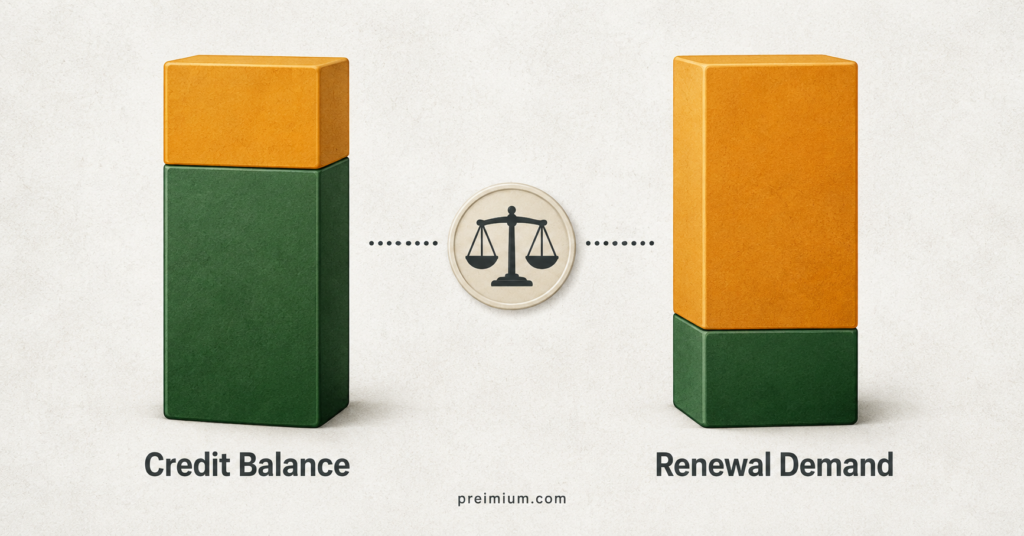
A base with only monthly customers is straightforward to forecast because usage is flat and predictable. Real customer bases rarely look like that. Once quarterly and annual plans enter the mix, IPTV Panel Reseller Credit Forecasting has to account for renewal clustering, where several long term customers happen to fall due in the same week or month.
The practical fix is a renewal calendar rather than a single monthly average. List every customer against their next renewal date, group by month, and multiply each group by its credit cost. This turns an abstract average into a concrete schedule you can check against your current balance before a heavy month arrives, rather than discovering the gap when a renewal fails.
Where Forecasts Usually Go Wrong
The most common mistake is forecasting from total customer count rather than active paying customer count. Trial users, lapsed accounts, and customers mid dispute inflate the number without contributing predictable renewal income, which pushes a reseller toward buying more credits than the paying base actually justifies.
The second mistake is ignoring seasonal sign up patterns. Reseller activity tends to rise around content calendar shifts and gift periods, and a forecast that only looks backward at a quiet month will underestimate the credits needed when new sign ups pick up.
The third is treating credit packs as if smaller purchases are always safer. Buying little and often avoids sitting on unused balance, but it also means paying a higher price per credit on smaller packs and running the operational risk of a delayed top up during a busy sales period. Forecasting exists precisely to remove that trade off by giving you enough lead time to buy a larger, cheaper pack before you need it rather than after.
When to Buy and How Much
A reasonable rule is to hold enough credits to cover your busiest forecasted month plus a buffer for unplanned new activations, rather than sizing purchases around an average month. Since non-expiring credit models mean unused balance isn’t wasted, the downside of buying slightly ahead of need is limited to cash tied up earlier than strictly necessary, which is a far smaller risk than a stalled activation during a sales conversation.
Review the forecast monthly rather than reactively. A ten minute check against your renewal calendar catches drift early, before a shortfall becomes urgent.
Pro tip: If your panel shows historical credit consumption by month, overlay it against your renewal calendar for the same period. Consistent gaps between the two usually point to trial credits or manual adjustments you’d otherwise miss.
Pro tip: Treat any month where annual and quarterly renewals cluster together as a flagged month in your calendar, and top up ahead of it specifically rather than relying on your general buffer.
For resellers still comparing panels before committing to a credit model at all, this guide to choosing a reliable IPTV reseller panel covers the operational factors worth checking before your first purchase. Forecasting only pays off if the underlying infrastructure is stable enough that your credit spend maps to genuine customer retention rather than churn caused by service issues, which this explanation of CDN and load balancing for resellers covers in more technical depth.
Seasonal and Growth Adjustments
A forecast built in a quiet month will understate a growth phase, and a forecast built during a promotional push will overstate a normal month. Rebuild the forecast whenever your customer count moves by a meaningful margin rather than sticking to a fixed quarterly review, since a fast growing reseller can outgrow a monthly forecast within a few weeks.
Growth also changes plan mix over time. Resellers who start new customers on short trial-to-monthly conversions often see a portion of that base shift to annual plans once trust is established, which changes the credit rhythm from steady monthly draws to occasional large draws. Track that shift rather than assuming the plan mix that worked in month one still applies in month twelve.

IPTV Reseller Credit Forecasting Checklist
- List every active customer against their exact renewal date
- Separate monthly, quarterly, and annual segments in the calendar
- Flag any month where multiple long term renewals cluster together
- Calculate baseline credit need from active paying customers only, not total sign ups
- Add a buffer for expected new activations based on recent sign up trends
- Compare current balance against the next two flagged months before buying
- Rebuild the forecast whenever customer count shifts by a meaningful margin
- Review actual consumption against the forecast monthly and adjust the model
Frequently Asked Questions
How far ahead should an IPTV reseller forecast credit needs?
A rolling two month view is usually enough for most resellers, since it gives time to spot a clustered renewal month and buy a larger pack before the cheaper per credit pricing window closes.
Does forecasting matter for a small reseller with only a handful of customers?
It matters less in absolute terms but the habit still helps, since even a small base can hit an unexpected renewal cluster that empties a balance faster than expected.
Should trial activations be included in a credit forecast?
Include them if your panel deducts credits for extended trials, since that consumption is real even though the customer hasn’t paid yet, but exclude them if your trials run on a separate free allowance.
What happens if a forecast is wrong and credits run out mid month?
Most panels simply block new activations and renewals until the balance is topped up, which means a mistimed shortage can delay a paying customer’s access rather than losing the sale outright, provided the top up happens quickly.
Is it better to forecast conservatively or generously?
Sizing toward the busiest forecasted month plus a small buffer tends to work better than an average based estimate, since the cost of holding slightly more credit is smaller than the operational cost of a delayed activation.
IPTV Reseller Credit Forecasting isn’t about predicting the future with certainty. It’s about replacing a guess with a renewal calendar, a segmented view of your customer base, and a monthly habit of checking the two against each other. Resellers who build this habit early tend to buy larger packs at better per credit pricing and rarely find themselves scrambling for a top up during a busy sales week. Start with the customer list you already have, sort it by renewal date, and the first forecast will take less time to build than most IPTV Panel resellers expect.