IPTV reseller cash flow is the gap between paying for credits upfront and collecting payment from customers later, and it is usually the reason a reseller with plenty of paying customers still finds their account balance uncomfortably tight. Most resellers assume profitability is the hard part. It rarely is. Margins on a credit based panel are usually healthy from day one. What actually catches people out is timing: credits get consumed the moment an account is created or renewed, but the customer might pay a week late, or on a different date entirely to when the credit was spent. Multiply that mismatch across thirty, sixty or two hundred customers and the gap becomes a real operational problem rather than a rounding error.
What IPTV Reseller Cash Flow Actually Looks Like Month to Month
A IPTV reseller panel runs on credits, and each credit typically activates one month of access for one customer. You buy a batch of credits upfront, which is an outgoing payment made before you have earned anything from it. Customers then pay you as their renewal dates come around, which are scattered across the month rather than arriving all at once. The business only feels comfortable when incoming payments consistently arrive ahead of, or at least alongside, the outgoing credit purchases needed to keep serving them.
This is different from a simple retail transaction where you buy stock, sell it, and the cycle resets cleanly. With a subscription model, every customer represents an ongoing commitment. A customer who joined in March needs a fresh credit spent on their account again in April, whether or not they have actually paid you for that month yet. If enough customers fall slightly behind on payment at the same time your own credit balance needs topping up, you can end up short even though your business, on paper, is profitable.

How Renewal Timing Creates the Squeeze
Renewal dates rarely spread evenly. A reseller who ran a promotional push in one particular week will find a disproportionate number of renewals clustering around that same week every month afterwards. If your credit top ups happen reactively, meaning you buy more only once your balance runs low, you can find yourself needing to purchase a fresh batch at the exact moment a wave of renewals hits, before some of those customers have actually paid.
The honest fix here is separating the rhythm of your credit purchases from the rhythm of your customer payments. Buying credits a little ahead of a known renewal cluster, rather than reactively during it, removes the pressure of needing customer payments to land on a specific day just to keep the lights on.
Pro tip: Map your renewal dates on a simple calendar or spreadsheet once, so you can see clusters coming a week or two in advance rather than discovering them the day your balance runs dry.
Where Reseller Cash Flow Actually Breaks Down
Most cash flow problems trace back to a small number of recurring causes rather than anything unpredictable. Seeing them laid out tends to make the fix obvious once you know which one applies to you.
Why a Cash Buffer Matters More Than a Bigger Discount
New resellers often chase the cheapest possible cost per credit, assuming that a lower unit cost automatically solves any money problem. It helps margin, but it does not solve timing. A reseller sitting on the lowest possible credit price can still run short if every customer payment is spent immediately on new stock the moment it arrives, leaving nothing in reserve for the week a handful of customers pay late.
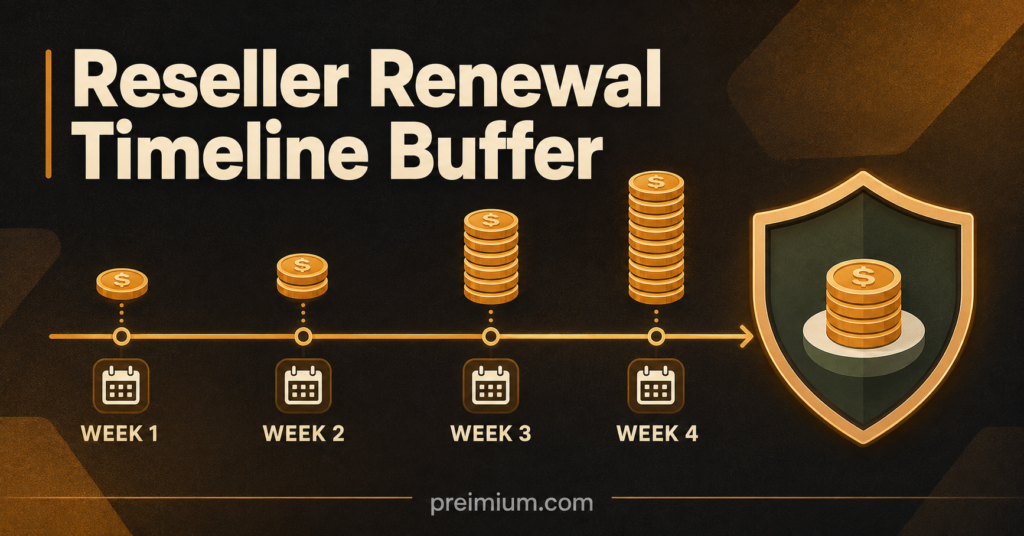
Holding back a modest buffer, even the equivalent of a week or two of average credit consumption, changes the entire dynamic. It means a slow payment week from a few customers does not force an awkward choice between delaying a top up and dipping into money set aside for something else. This is one of the areas where an IPTV reseller panel with non expiring credits genuinely helps, because a held buffer never quietly loses value while it waits to be used.
Reliability and Refunds Have a Direct Cash Flow Cost
It is tempting to think of technical reliability as a separate issue from finances, but the two are closely linked. A customer who experiences repeated buffering during peak evenings is far more likely to ask for a refund or simply stop paying at renewal, and either outcome removes money you were counting on. The infrastructure behind your panel, specifically how well it copes with busy periods and how quickly it recovers from a failed server, has a measurable effect on how predictable your incoming payments actually are.
Pro tip: Track refund and complaint requests against the dates and times they happened. A pattern clustering around specific evenings usually points to a supplier capacity issue rather than anything you are doing wrong, and it tells you exactly what to raise with your supplier or reconsider.
Building a Simple Monthly Routine
A predictable cash position rarely comes from a clever spreadsheet formula. It comes from doing the same handful of checks at the same point every month until they become automatic.
Set a fixed day, perhaps the first Monday of the month, to review your current credit balance against known upcoming renewals for the next four weeks. Compare that against money actually collected from customers so far, not money you expect to collect. Top up credits before the balance gets uncomfortably close to zero rather than waiting for a warning, since a last minute purchase under pressure removes any room to negotiate a better pack size. Finally, set aside a fixed small percentage of each month’s income into a buffer before spending the rest on growth, support tools or your own drawings.
Pro tip: Treat your credit buffer the same way you would treat an emergency fund. It only works if you resist the urge to spend it down to zero the moment things feel stable.
Sub Reseller Considerations
If you operate as a sub reseller rather than buying directly, your cash flow depends partly on someone else’s decisions. Confirm exactly how quickly the reseller above you processes top up requests, since a slow turnaround at their end can delay your own ability to activate a customer even when you have the money ready. Clarify your margin in concrete terms rather than a rough estimate, and keep your own buffer separate from theirs, because their pricing or availability can change with little notice.
How Much Buffer Is Actually Sensible
There is no single correct figure here, since it depends on your customer count and how tightly your renewals cluster. A reseller with thirty steady long term customers on staggered dates needs a smaller buffer than one who ran a single large promotional push and now has eighty renewals landing in the same week. The practical test is simple: could you cover a full week of renewals from your buffer alone if every customer paid three days late at once. If the honest answer is no, the buffer needs building up before anything else.
Frequently Asked Questions
Why does my reseller account run low on credits even though I am profitable?
Profit and cash flow are not the same thing. You can be earning more than you spend overall while still running short in a given week, because credits are consumed the moment an account activates or renews, regardless of whether that customer has paid you yet.
Should I buy the largest credit pack available to avoid running short?
A larger pack lowers your cost per credit, but it does not fix timing problems on its own. It helps most when paired with a buffer and a consistent top up schedule, rather than being treated as a one off solution.
Do unused credits lose value if I buy more than I need?
On a panel with non expiring credits, no. They simply sit as available stock until you use them, which is one reason building a small buffer costs you nothing beyond the initial purchase.
How do I handle a customer who repeatedly pays a few days late?
Set a fixed renewal date for that customer and send a short reminder two or three days beforehand. Persistent lateness is usually a communication gap rather than an unwillingness to pay, and a clear date fixes most of it.
Is it worth chasing the cheapest credit price above everything else?
Cost per credit matters for margin, but reliability and support responsiveness affect how often you deal with refunds and churn, which has a bigger long term effect on cash flow than a small saving on unit price.
Conclusion
IPTV reseller Panel cash flow comes down to one practical habit: separating the timing of your credit spending from the timing of your customer payments, rather than assuming the two will naturally line up. A small standing buffer, a fixed monthly review routine and a supplier whose infrastructure keeps refund requests rare will do more for your financial stability than chasing the lowest possible credit price. Start with a single monthly check of your balance against upcoming renewals, and build the buffer habit from there.
IPTV Reseller Cash Flow Checklist
- Map your customer renewal dates so clusters are visible weeks in advance
- Top up credits ahead of a known renewal cluster, not during it
- Set a fixed renewal date and reminder for customers who pay inconsistently
- Hold a standing credit buffer separate from money earmarked for growth
- Review your balance against upcoming renewals on the same day each month
- Track refund requests by date to spot supplier reliability patterns early
- Confirm top up turnaround times if you operate as a sub reseller