IPTV Reseller Trial Abuse Prevention comes down to one habit: never issue a trial line until you know who is asking, which device it is for, and whether that person or device has had one before. Pair that check with short durations, a single connection and a written log, and most repeat claimers stop coming back, because there is nothing left for them to collect.
Not every unpaid trial is abuse, though. A genuine buyer who tests for an evening and goes quiet is a lost sale, not a loss, and treating that person like a fraudster costs more than the trial ever did. The behaviour worth stopping is narrower: the same person returning under new numbers, trial logins passed around a group chat, or a sub-reseller handing out test lines as a free service while the quota and the support time come out of your account.
Where Trial Abuse Actually Costs a Reseller
A trial line looks free on the screen, which is exactly why its cost gets overlooked. Depending on the provider, trials may draw on a capped allowance, consume a fraction of a credit, or sit outside your IPTV credits entirely. Even in the last case, they are not free to run.
Every trial user asks the same setup questions a paying customer asks. Which app, which server address, why the guide is empty, why the picture buffers on hotel Wi-Fi. That support time is identical whether the person converts or not, so a reseller issuing forty trials a week to serial claimers is effectively running an unpaid helpdesk.
There is also the relationship with your parent provider to consider. A parent panel can reduce or withdraw trial permissions from an account, and a reseller dashboard full of trial lines with almost no activations is not a pattern you want to explain.
Finally, a legal point that often gets lost: trials should only ever cover a service you are authorised to resell. A tidy trial process proves good administration. It says nothing about whether the content behind it is properly licensed, and that question has to be settled with your provider before any trial goes out.
Patterns worth naming
The serial claimer. One person, several phone numbers or email addresses, a fresh trial every week. Often the device stays the same even when the contact details change.
The shared login. A trial username and password posted in a group, so ten people try to use a line meant for one. Single-connection limits make this visible quickly, because the line starts dropping or showing connection errors.
Trial farming through sub-resellers. A sub-reseller with trial permissions issues test lines freely, sometimes to attract customers for a different provider, and never converts any of them.
Form bots and time-wasters. Automated or low-effort submissions through a website trial form, usually with no reply when you follow up.
The probe. Someone requesting a trial mainly to inspect your setup, server details or pricing. It is hard to prove, but these requests tend to skip any question about devices or viewing needs.
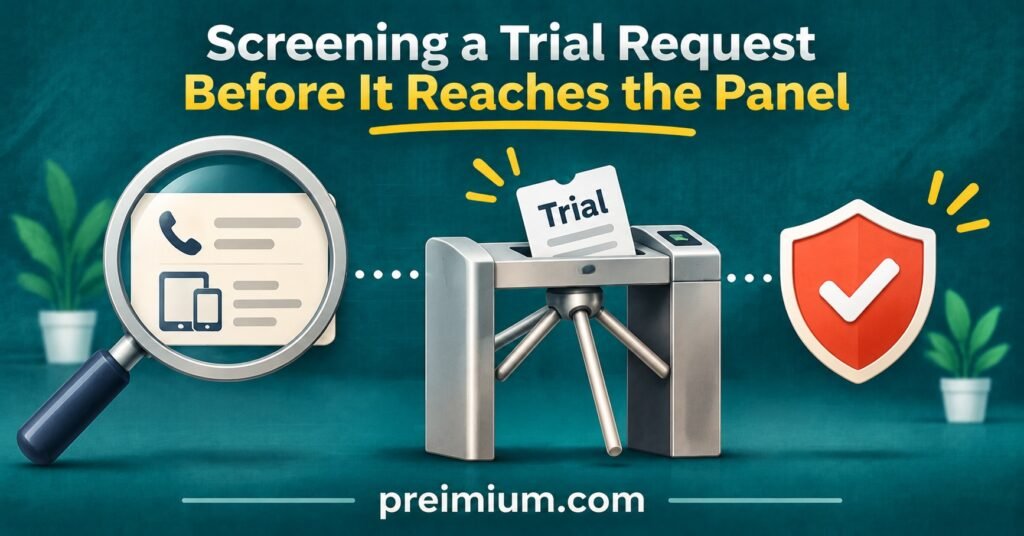
A Trial Request, Followed Through the Panel
The safest trial process is one that runs the same way every time, whoever is on shift. Here is how a single request moves from first message to expiry.
Intake: two questions before anything else
Ask which device the trial is for and how they heard about you. Neither question feels intrusive, and both do real work. The device answer tells you what setup help to prepare and, for set-top boxes, gives you a device identifier to check. The referral answer separates word-of-mouth enquiries from cold requests. Bots and probes frequently ignore both questions, which filters them before you spend a single minute.
The lookup
Search your trial log for the phone number, the email and, where relevant, the MAC address or app device ID. Search the panel’s notes field too, because a line created months ago may carry the reference you need. A match does not automatically mean refusal; it means the conversation changes from “here is your trial” to “you tried us in March, would a short paid month suit you better?”
Issuing the line
Create the trial with a fixed duration, one connection, and a note that links it to the log entry. If your panel lets you restrict the trial package, keep it representative of what a paying customer receives, otherwise you convert people into complaints. Tools covered in this guide to automated IPTV user management can help keep line creation and records consistent once your volume grows.
The midpoint check
Send one message roughly halfway through the trial asking whether everything is working. It is genuine IPTV support, and it is also the most useful signal you have. Real buyers reply with questions or feedback. Serial claimers and shared logins rarely do.
Expiry and outcome
Let the trial expire on schedule and record what happened: converted, declined with a reason, or no reply. If you allow an extension, allow one, and write down why. A trial that quietly becomes a week long is no longer a trial.
IPTV Reseller Trial Abuse Prevention in Practice: A Week of Requests
Picture a small UK IPTV reseller panel running a single reseller dashboard who receives 24 trial requests in one week. The figures below are illustrative, chosen to show how the checks interact rather than to suggest what any business should expect.
| Requests | What the checks showed | Decision |
|---|---|---|
| 11 | New contacts, answered the device question, no log match | Standard trial issued |
| 5 | New phone numbers, but device IDs matched earlier trials | Second trial declined, short paid term offered |
| 3 | Website form submissions, no reply to the device question | No trial issued |
| 3 | Asked for multiple connections on a trial | Offered a single-connection trial instead |
| 2 | Came through a sub-reseller with nine trials and no activations that week | Held while the sub-reseller was contacted |
All three multi-connection requesters accepted the single-connection offer, so 14 trials went out. The midpoint message drew replies from most of the first group and silence from two of the three who had wanted extra connections, which suggests those logins were meant for sharing.
What the week shows is that no single check did the job. The phone number lookup would have missed five repeat claimers; the device match caught them. The device question removed the form submissions without any technical blocking. And the sub-reseller problem was invisible request by request, only showing up once trials were counted per account.
The paid-term offer matters too. Two of the five repeat claimers took it, which turns a refusal into revenue rather than an argument.
Rules That Backfire
Asking for identity documents. It feels thorough, but it means collecting far more personal data than a trial needs, which sits badly with the data minimisation principle under UK GDPR, explained on the ICO website. It also drives away the cautious, legitimate buyers you most want.
Blocking by IP address alone. Households share one address, and mobile networks commonly place many customers behind shared addresses. An IP ban can lock out a stranger while the actual repeat claimer simply switches to another network.
Extending on request. Every unrecorded extension teaches people that the trial length is negotiable. Within a month, the standard trial is whatever the most persistent requester asked for.
Instant automatic trials at any hour. A website form that issues working credentials immediately, with no human step, is the easiest target for bots and serial claimers. Even a short manual review window removes much of the incentive.
Going silent after expiry. If the only message a trial user receives is the login, you lose the genuine buyers who needed one nudge. Treating trial users with the same care as customers is part of good customer service in IPTV reselling, and it is also how you learn who was never going to buy.
Keeping trial logs forever. A log is useful for months, not years. Set a retention period, write it down, and stick to it.

A Monthly Trial Audit for Your Reseller Dashboard
Thirty minutes once a month is usually enough to spot drift before it becomes a habit.
- Export every trial line created in the last 30 days and match each one to a log entry; any line without one needs an explanation.
- Work out trial-to-paid conversion for your own trials and separately for each sub-reseller.
- Search the log for repeated device IDs, repeated emails, and phone numbers that differ by a digit or two.
- List every extended trial and check that a reason was recorded.
- Confirm expired trial lines are disabled rather than left active with a distant expiry date.
- Review sub-reseller trial permissions and quotas against their activation history, and reduce them where trials never convert.
- Check that the trial package still reflects the paid service honestly.
- Read a handful of midpoint messages to make sure the tone stays helpful rather than suspicious.
- Delete or anonymise log entries older than your stated retention period.
Questions Resellers Ask About Trial Controls
How long should a trial line last?
Long enough to test the service properly on the customer’s own device, which for most people means one evening. Trials on IPTV reseller panels are commonly measured in hours rather than days, and shorter windows make a shared login far less attractive.
Is a device ID or MAC address check reliable?
It is a strong signal, particularly for set-top boxes and apps that display a fixed device ID, but some devices allow the identifier to be changed. Treat it as one check among several rather than the only one.
Should sub-resellers be allowed to create trials?
That depends on how much you trust their judgement. A sensible middle ground is a small trial quota, reviewed monthly against their activations, and withdrawn if trials consistently go nowhere.
What should I do when a returning trial user seems genuine?
Offer a short paid term instead of a second trial. It respects their interest without resetting the rule, and anyone serious about the IPTV subscription will usually accept.
Would charging a small fee for trials stop abuse completely?
A paid trial removes most of the incentive to abuse it, but it also reduces the number of people willing to try. If you take this route, state the terms clearly before payment so there is no confusion about what the fee covers.
Keeping the Door Open, Not Wide Open
Good IPTV Reseller Trial Abuse Prevention is less about catching people out than about making repeat claiming pointless while keeping the experience pleasant for real buyers. A two-question intake, a lookup, a single-connection line, one midpoint message and a monthly audit will handle most of the problem in any IPTV reseller business.
It will not handle all of it. You cannot see trials someone took from another reseller on the same provider, and a determined person can change more than one detail at once. The realistic aim is to make abuse expensive in effort and cheap for you to absorb. If you are starting from nothing, set up the trial log this week, before changing anything else, and explore more IPTV panel reseller resources at preimium.com.