Your IPTV reseller churn rate is the percentage of paying customers who cancel or simply don’t renew within a set period, and it tells you more about the health of your business than your monthly sales figure ever will. A reseller who signs up thirty new customers a month but loses twenty-five of them is not growing. They’re treading water while paying for the privilege.
Working Out Your Churn Number Properly
The basic formula is straightforward. Take the number of customers who cancelled or lapsed during a given month, divide that by the number of active customers you had at the start of the same month, then multiply by 100. If you started March with 80 active subscribers and lost 6 of them before renewal, your churn for that month sits at 7.5%.
The part most IPTV Panel resellers skip is deciding what “lapsed” actually means for their business. A customer who forgets to renew for three days and then comes back isn’t the same as one who has genuinely walked away. Set a clear cut-off, usually somewhere between 7 and 14 days past the renewal date, and apply it consistently every month. Without a fixed rule, your own numbers will bounce around for reasons that have nothing to do with your service quality.
There’s No Universal Benchmark, So Build Your Own
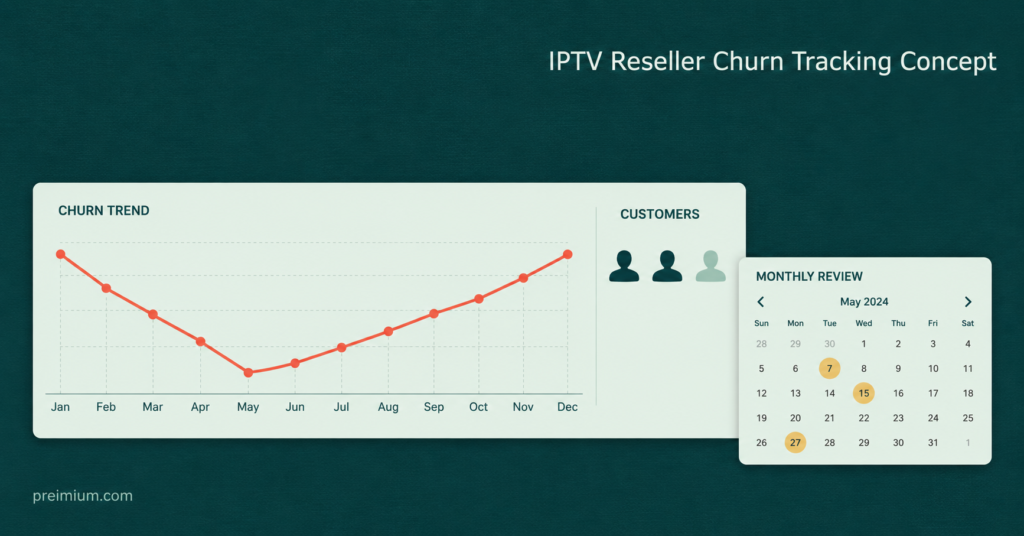
Anyone promising you an exact “good” churn percentage for IPTV reselling is guessing. Customer expectations, pricing, device mix and even the time of year all shift the number, and no independently verified industry-wide figure exists for this specific niche. What matters far more is your own trend line. If churn was 5% in January and has crept to 11% by June with no change in your customer base or pricing, something in your service or support has shifted, and that’s worth investigating before it compounds.
Reviewing your figure monthly rather than quarterly gives you an earlier warning. A quarter is often too slow to catch a bad supplier switch or a run of buffering complaints before it has already cost you a meaningful chunk of your customer list.
What Actually Drives An IPTV Reseller Churn Rate Up
Cancellations rarely come down to a single cause. They usually stack. A customer who experiences occasional buffering might stay. The same customer hit with buffering, a slow support reply and a price increase in the same month is far more likely to leave for good.
Pro tip: Ask a customer who cancels why, even with a single short message. You won’t get a reply every time, but the pattern across the ones who do answer is often more useful than any dashboard metric.
What Counts As A High IPTV Reseller Churn Rate
Rather than chasing a number pulled from an unrelated industry, judge your IPTV reseller Panel churn rate against your own history and against what you can actually control. A spike right after a supplier outage tells you the outage is the problem, not your pricing. A steady, gradual rise over several months with no obvious trigger usually points to something less visible, like inconsistent support response times or a slow build-up of device compatibility complaints you haven’t been logging properly.
It helps to separate churn caused by things within your control from churn you genuinely can’t influence. Some customers move house, switch broadband providers, or simply stop watching as much television. That kind of loss happens to every subscription business and shouldn’t be treated the same way as losses caused by buffering or a support ticket that went unanswered for four days. Working through the panel issues behind lost customers is usually the fastest way to tell the two apart.
Reducing Churn Without Just Cutting Your Price
Dropping your monthly price is the easiest lever to pull and often the worst one. It trains customers to expect discounts, squeezes your margin, and rarely fixes the actual reason someone was thinking about leaving in the first place.
A better starting point is proactive renewal contact. Most cancellations aren’t dramatic decisions; they’re a customer who simply didn’t get around to renewing and quietly moved on. A short reminder a few days before expiry, sent consistently, recovers a meaningful share of those accounts without any discount involved.
Support responsiveness matters more than most new resellers expect. A customer whose stream drops during a big match and gets a reply within the hour behaves very differently to one who waits until the next day. If you’re running this as a side business around a day job, even a simple auto-reply acknowledging the message and giving a realistic response time reduces the frustration that turns into a cancellation.
Pro tip: Keep a running note of every device and firmware version your customers report problems on. After a month or two, patterns emerge that a single ticket never shows on its own.
Pricing structure plays a role too. Offering clear tiers based on device count or content package, rather than one flat price for everyone, gives customers a reason to stay and upgrade instead of shopping around when their needs change. Setting up a UK IPTV reseller business properly from the outset, with tiers and renewal processes defined early, tends to produce noticeably steadier retention than adding structure after the fact.
Sub-Reseller Churn Works Differently
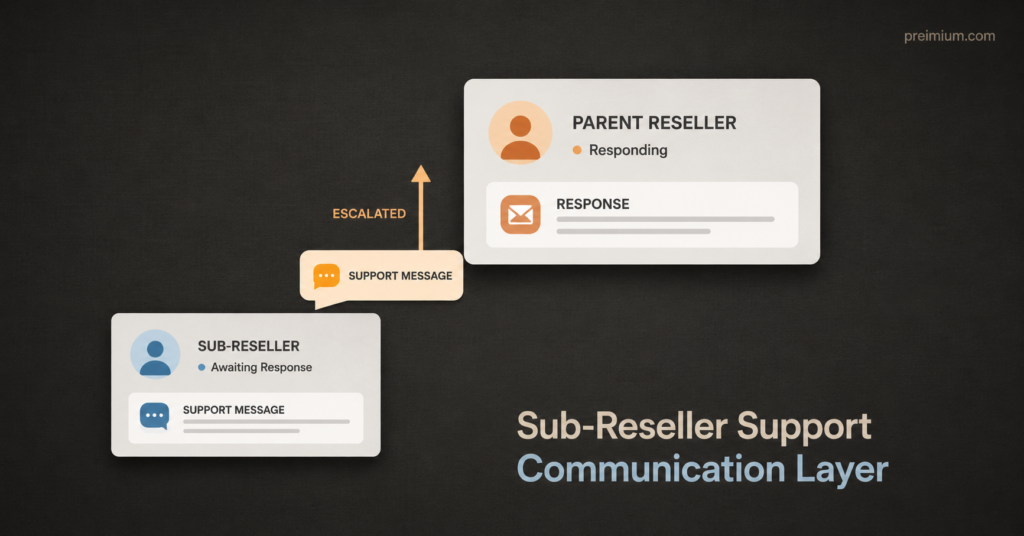
If you’re operating as a sub-reseller under someone else’s panel, your churn rate is tied to a layer of infrastructure you don’t control directly. A parent reseller’s server problems or account restrictions become your customer’s problem, and your customer will hold you responsible for it regardless of where the fault actually sits.
This makes documentation and communication even more important. Keep your own records of uptime, support response times and any recurring issues reported by your parent panel, separate from your own customer notes. If churn rises and the cause traces back to your supplier rather than your own service, you’ll want that evidence both to raise it with them and to explain honestly to affected customers what happened and what you’re doing about it.
Frequently Asked Questions
How often should I calculate my churn rate?
Monthly is usually the right rhythm for most reseller businesses. It’s frequent enough to catch a problem early without reacting to normal week-to-week noise in a small customer base.
Does one cancelled customer during a trial count towards churn?
No. Free or discounted trial users who never became paying subscribers shouldn’t be included in your calculation. Churn should only measure customers who were already paying you.
Can churn ever be a good sign?
Occasionally. If you’ve deliberately raised prices to attract a different type of customer, or dropped a poorly performing device category, a short-term rise in churn alongside stronger average revenue per customer isn’t automatically bad.
Is a rising churn rate always about the streaming quality?
Not always. Billing confusion, unclear renewal dates and slow support replies cause just as many cancellations as buffering does, and they’re often easier and cheaper to fix.
Should I offer a discount to win a customer back after they’ve cancelled?
Sometimes, but treat it as a last resort rather than a first response. Understanding why they left first means any offer you make actually addresses the real problem instead of just delaying the same cancellation.
Keeping The Number Down
Bringing your IPTV reseller Panel churn rate under control isn’t about a single fix. It’s the combined effect of reliable streams, renewal reminders that actually go out on time, support replies that arrive quickly enough to matter, and pricing that customers understand without having to ask. Track the number consistently, separate the losses you could have prevented from the ones you couldn’t, and treat every cancellation with a reason attached as useful information rather than just a lost sale.
Reseller Retention Checklist
- Calculate churn monthly using a consistent lapse cut-off period
- Send renewal reminders 3 to 5 days before each customer’s expiry date
- Log every device or app compatibility complaint with the date and device model
- Test your supplier’s stream quality during peak evening hours, not midday
- Separate churn caused by service issues from churn caused by circumstances outside your control
- Give existing customers advance notice before any price change
- Keep a short, honest record of why cancelled customers say they left