An IPTV Reseller Renewal Strategy is the system you use to track expiry dates, contact customers before they lapse, and turn that contact into a paid extension instead of a silent cancellation. Most resellers lose customers not because the service failed, but because nobody reached out at the right moment. Fixing that timing problem is usually worth more than chasing new sign-ups.
Why Renewals Deserve Their Own Plan
New customer acquisition gets most of the attention when someone starts an IPTV panel reselling business, yet the accounts you already have are the ones paying your bills every month. A customer who renews without prompting is rare. Most need a nudge, and the resellers who treat that nudge as a routine task rather than an afterthought tend to keep far more of their base intact from one billing cycle to the next.
The panel itself will show you an expiry date for every account, but a date sitting in a dashboard does nothing on its own. A renewal strategy is simply the habit of turning that date into an action before it becomes a problem.
IPTV Reseller Renewal Strategy Basics: Know When Decisions Actually Get Made
Customers rarely decide to renew on the exact day their subscription ends. That decision usually forms in the days before, while they’re still watching without interruption and haven’t yet felt the inconvenience of losing access. Wait until the account has already expired and you’re negotiating from a weaker position, because now they’ve had a few days without the service and started wondering whether they need it at all.
This is why the timing of your first message matters more than its wording. A reminder sent while the picture is still perfect reads as a helpful heads-up. The same message sent after a blackout reads as a sales pitch to someone who’s already moved on.
Reminder Timing That Doesn’t Feel Like Pressure
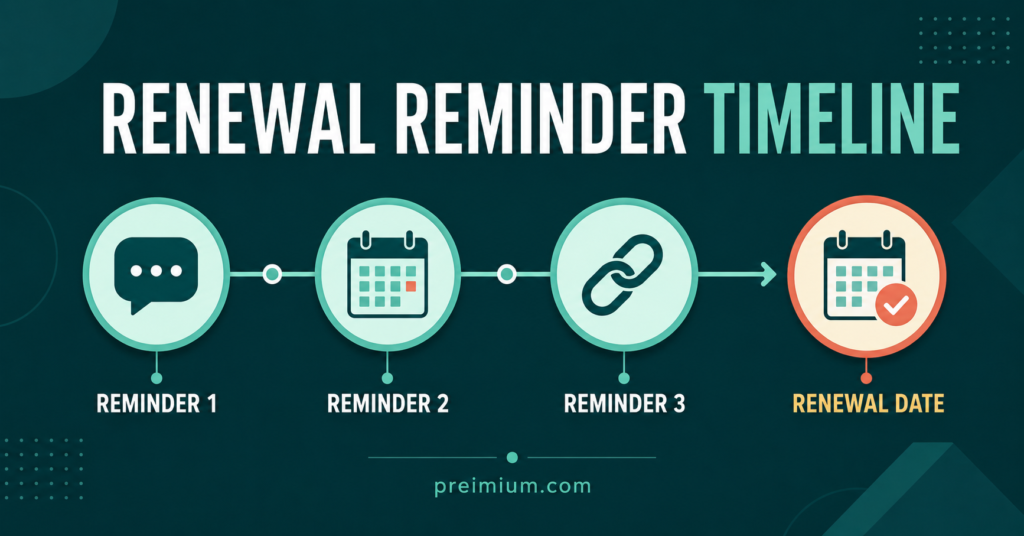
A three-stage reminder pattern works for most reseller operations without coming across as pushy:
A first message roughly a week before expiry, framed as a simple heads-up rather than a request for payment. A second message two to three days out, this time including the renewal link or payment details directly, so there’s no extra step for the customer. A final short message on the day itself, acknowledging that the subscription is ending and offering a quick way to restart it if they missed the earlier notes.
Spacing matters as much as content. Sending all three in the same week trains customers to ignore your messages entirely, since they’ll assume the first one was premature and wait for the last.
Pro tip: Keep renewal messages short enough to read on a lock screen. A one-line WhatsApp message with a payment link converts better than a paragraph explaining the benefits of staying subscribed.
Using Term Length and Pricing as Renewal Levers
Monthly plans give customers twelve decision points a year to walk away. Longer terms cut that number down, which is why many UK IPTV resellers quietly favour three, six, and twelve-month options even when the headline price looks less attractive per month. The trade-off is upfront cost to the customer, so this only works when it’s offered as a genuine choice rather than pushed as the only option.
Small renewal-only pricing, such as a modest discount for paying before the expiry date rather than after, can shift behaviour without eating into your margin the way a permanent price cut would. The discount only needs to be big enough to make acting early feel worthwhile, not big enough to matter on its own.
| Renewal Window | What To Do |
|---|---|
| 7 days before expiry | Send a low-pressure heads-up, no payment link required yet |
| 2 to 3 days before | Send the direct renewal link and confirm the price |
| Day of expiry | Send a short final reminder with a fast way to pay |
| 1 to 7 days after | Offer a quiet win-back message, no guilt, just an easy restart |
| Beyond 7 days lapsed | Move to a slower, occasional follow-up rather than repeated chasing |
Handling Customers Who Don’t Renew Straight Away
Not everyone renews on time, and treating every late account as a lost cause wastes accounts that were simply distracted or short on cash that week. A single, low-pressure message a few days after expiry, offering to reactivate the account the moment they’re ready, keeps the door open without making the customer feel chased.
Beyond a week or two of silence, it’s usually better to stop pushing and let the account sit quietly rather than sending repeated reminders that start to feel like spam. A customer who comes back a month later after seeing your message once is still a win. One who’s been messaged five times in a fortnight is more likely to block the number than reply.
Pro tip: Keep a simple note against lapsed accounts explaining why they left, if you know it. Price sensitivity, a house move, or a device change all call for different win-back approaches, and a generic message rarely fits all three.
What Renewal Patterns Tell You About Sub-Reseller Accounts
If you’re running sub-resellers underneath your own account, renewal behaviour at that level tells a different story than an individual subscriber lapsing. A sub-reseller whose customer base is renewing consistently is generating steady credit demand from you, which is useful information when deciding how much stock to hold. One whose renewal rate is dropping across several of their own customers at once is often a sign of a service issue on their end rather than simple customer churn, and it’s worth checking in before assuming the worst.
Tracking Renewals Without Overcomplicating It
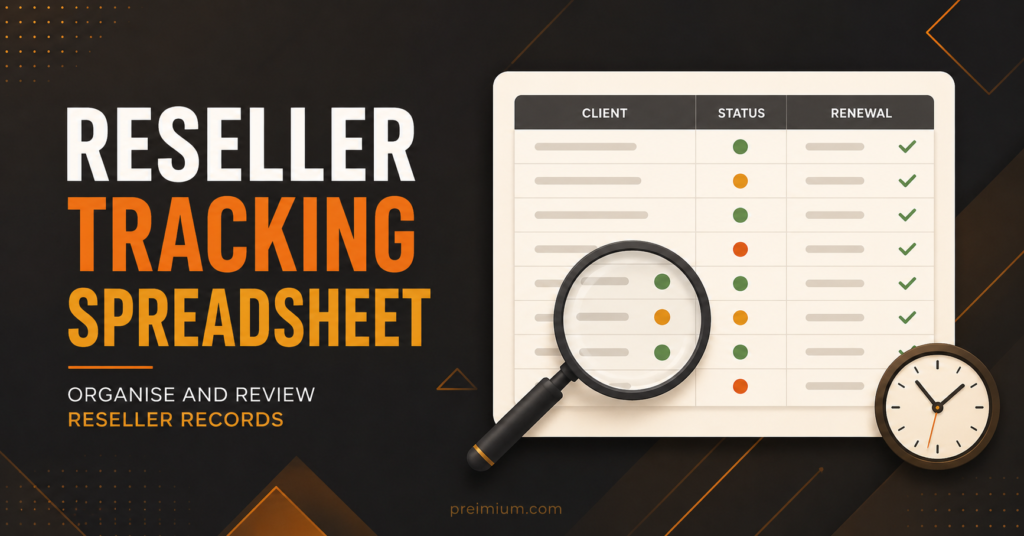
A spreadsheet with expiry dates, last contact date, and outcome is enough for most reseller operations running a few hundred accounts or fewer. The panel already stores the expiry date, so the extra tracking only needs to cover what you did about it and whether it worked. Trying to build an elaborate system before you have enough volume to justify it usually just adds friction to a process that should stay quick and repeatable.
As the customer base grows, the same three columns scale reasonably well. What changes is the discipline needed to check them daily rather than whenever there’s spare time, since a missed renewal window on day seven is much harder to recover than one caught on day one.
Renewal Strategy Checklist
- Confirm every account’s expiry date is visible and up to date in the panel
- Send the first renewal reminder around seven days before expiry
- Include a direct payment or renewal link in the second reminder
- Keep messages short enough to read and act on from a phone
- Note the reason for any lapsed account where it’s known
- Send one low-pressure win-back message within the first week after expiry
- Stop chasing lapsed accounts after two unanswered messages
- Review sub-reseller renewal patterns separately from individual subscriber patterns
Frequently Asked Questions
How early should I contact a customer before their IPTV subscription expires?
Around seven days out works well for a first message, with a follow-up two to three days before expiry that includes the actual payment link.
Does offering a discount for early renewal actually help?
A small, renewal-only discount can encourage customers to act before the expiry date rather than after, without needing to lower your standard pricing permanently.
Should I keep messaging a customer who hasn’t renewed after a week?
One further low-pressure message is usually enough. Repeated follow-ups beyond that tend to annoy rather than convert.
Is it worth pushing longer subscription terms to reduce renewal work?
Longer terms reduce how often a customer has to make a renewal decision, which can help retention, but they should be offered as a genuine option rather than the only one available.
How do I know if a lapsed sub-reseller account is a service problem rather than normal churn?
If several of a sub-reseller’s own customers lapse around the same time, it’s worth checking service quality on their end before assuming it’s ordinary customer turnover.
Image Title: Renewal Reminder Timeline
Image Prompt: Modern professional blog illustration showing a horizontal timeline with three reminder points leading up to a subscription date, deep teal background, clean flat icons for a message bubble, a calendar, and a payment link, moderate detail, clear visual hierarchy, small preimium.com text near the bottom, no logos or branding beyond the domain text
Size: 1200×628
Getting a renewal strategy right is what separates a reseller business that grows month over month from one that’s constantly replacing the same number of customers it lost. Once your reminder timing and tracking habits settle into a routine, an IPTV Reseller Renewal Strategy stops being a task you remember to do and becomes something that happens automatically in the background while you focus on bringing in new accounts.
Image Title: Reseller Tracking Spreadsheet Concept
Image Prompt: Modern professional blog illustration of a simplified tracking sheet with columns and checkmarks, warm amber and charcoal colour palette, flat design with a magnifying glass icon and a small clock icon, two to three visual elements only, clean composition, small preimium.com text near the bottom, no logos or broadcaster imagery
Size: 1200×628
For related reading on keeping accounts active longer, see how to calculate and lower IPTV reseller churn, which pairs closely with renewal timing. Understanding IPTV reseller customer lifetime value also helps put renewal work into financial context, and IPTV reseller credit forecasting is useful once renewal patterns start shaping how many credits you buy each month. If cash timing around renewals is a concern, managing IPTV reseller panel cash flow covers the gap between paying for credits and collecting from customers.