An IPTV Reseller CRM UK setup exists mainly to solve one problem: knowing exactly when every customer’s subscription runs out, before the customer notices it themselves. Miss that date and you lose a renewal you already had. Catch it three days early and you usually keep the customer for another cycle. Everything else a CRM does for a reseller, from customer notes to sub-reseller visibility, sits underneath that single job.
Why Renewal Dates Slip Through the Cracks
Most IPTV panel resellers start out tracking renewals in their head. It works fine with six customers. It stops working somewhere around customer twenty, when two or three expiry dates land in the same week and one of them gets forgotten because a different customer messaged about a buffering issue that afternoon.
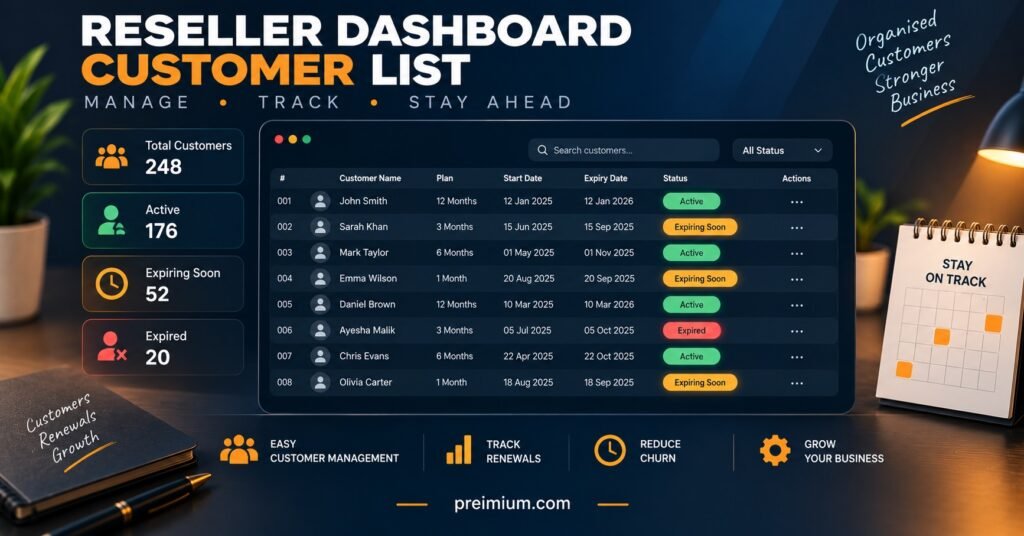
The panel itself usually shows an expiry date somewhere in the account list, but that’s a static field, not a workflow. Nothing pings you three days before it lapses. Nothing tells you which customers went quiet after their last renewal and are drifting towards cancellation. A spreadsheet fixes the visibility problem but still depends on someone opening it daily and remembering to check, which is exactly the habit that breaks under real workload.
What an IPTV Reseller CRM UK Setup Should Actually Track
Strip away the marketing language around “customer relationship management” and a reseller only needs a handful of fields tracked reliably:
- Subscription start date and exact expiry date, not just “1 month” or “3 months” written as a note
- Device type, since a customer on an older Smart TV app may need different support than one on a Fire Stick
- Last contact date, so you can spot customers who haven’t been in touch since their last renewal
- Payment method and price paid, since resellers often run informal discounts that are easy to forget by the next cycle
- Trial status, separating people still on a free trial from paying subscribers
If a system tracks those five things reliably and reminds you when action is needed, it’s doing the core job. Everything beyond that, automated messaging, tagging, reporting dashboards, is a convenience layer rather than a requirement.
Built-In Panel Tools vs a Dedicated CRM
Some IPTV reseller panels include basic customer management inside the dashboard itself. Others expect resellers to bring their own system, whether that’s a spreadsheet, a small CRM tool, or a WhatsApp Business setup with saved labels.
| Tracking method | Best suited to | Limitation |
|---|---|---|
| Panel’s built-in customer list | Small reseller accounts under 30 customers | Rarely sends reminders or flags upcoming expiries |
| Spreadsheet | Resellers who want full control over fields | Depends entirely on manual checking |
| Dedicated CRM or scheduling tool | Growing accounts with 50+ customers | Adds a monthly cost and a short setup curve |
None of these is universally correct. A IPTV Panel reseller with fifteen loyal customers gains very little from a paid CRM subscription. A reseller managing eighty accounts across several sub-resellers is losing real money every month without one, simply through renewals that slip past unnoticed.
Pro tip: Sort your customer list by expiry date rather than by name or join date. It turns “who’s due soon” from a mental exercise into a glance.
Building a Renewal Workflow That Runs Without You Remembering
The fix for missed renewals isn’t a better memory, it’s a workflow that doesn’t depend on one. A basic version looks like this: every customer’s expiry date gets a reminder set three days ahead, a message goes out with a simple renewal link or payment instruction, and a second reminder follows the day after expiry if there’s been no response.
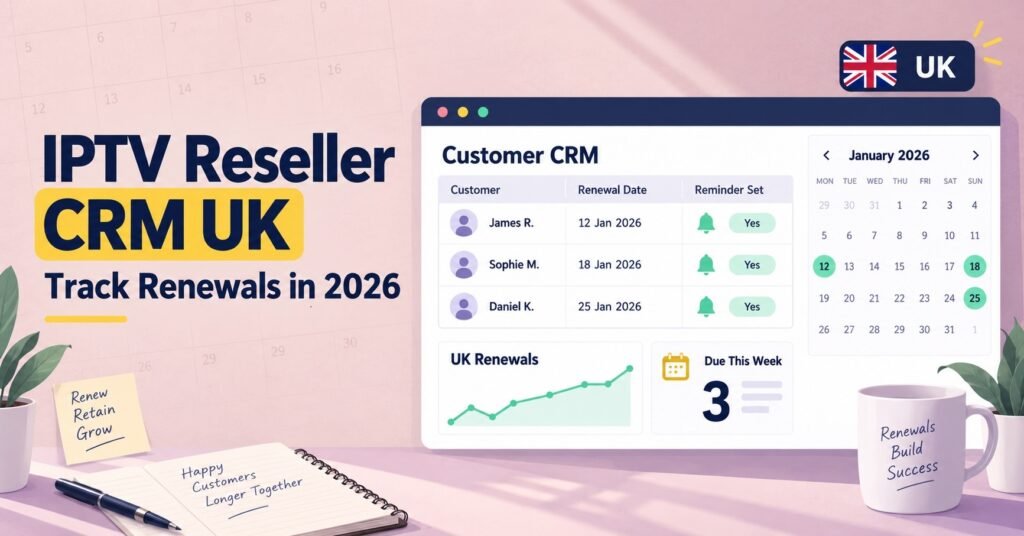
This doesn’t need automation software to work. A recurring calendar reminder tied to each customer’s expiry date achieves the same outcome for a smaller account. What matters is that the reminder exists somewhere outside your memory, checked on a fixed schedule rather than whenever you happen to think of it.
Pro tip: Message customers before expiry rather than after. A renewal reminder sent early reads as good service. The same message sent after the account has already lapsed reads as a sales pitch.
Sub-Reseller Visibility and Shared Customer Records
Where a reseller runs sub-resellers underneath their own account, tracking gets more complicated. The parent account usually can’t see individual customer expiry dates unless the sub-reseller shares that information, which means renewal tracking has to happen at two separate levels rather than one shared view.
A workable approach is asking each sub-reseller to maintain their own customer list using the same format, whether that’s a shared spreadsheet template or consistent fields inside a CRM. It doesn’t need to be identical software, just consistent enough that a parent reseller can spot-check renewal activity without chasing down a different format from every sub-reseller.
Common Mistakes That Quietly Cost Renewals
A few habits show up repeatedly across reseller accounts that struggle with renewals:
Treating the panel’s default customer list as sufficient tracking, then discovering three months in that half the expiry dates were never updated after manual renewals.
Recording trial customers in the same list as paying subscribers without a status flag, which makes it easy to accidentally chase a trial user for a “renewal” that was never a paid subscription.
Waiting for the customer to notice their account has stopped working before reaching out, rather than contacting them proactively before the cut-off.
Losing payment history when a customer switches devices or asks for a plan change, leaving no record of what they’ve actually paid or when their next renewal should genuinely fall.
Frequently Asked Questions
Do I need a paid CRM tool to manage IPTV renewals?
Not necessarily. A well-maintained spreadsheet with expiry dates and calendar reminders covers most accounts under thirty or forty customers. A dedicated CRM becomes worth the cost once manual checking starts missing renewals regularly.
Can my reseller panel handle renewal tracking on its own?
Some panels list expiry dates inside the customer account view, but few send proactive reminders. Treat the panel as a data source rather than a full tracking system unless it specifically advertises renewal alerts.
How far in advance should I contact customers about renewal?
Three days before expiry gives most customers enough time to pay without feeling rushed, while still leaving room for a follow-up message if they don’t respond immediately.
What’s the difference between churn tracking and renewal tracking?
Renewal tracking is about catching individual expiry dates in time. Churn tracking looks at the pattern across your whole customer base over months, which is useful for spotting a wider retention problem rather than a single missed date.
Should trial customers be tracked the same way as paying subscribers?
No. Keep a separate status for trials so they don’t get mixed into renewal reminders meant for paying customers, and so trial-to-paid conversion can be measured on its own.
Renewal Tracking Checklist
- Record exact expiry date for every customer, not an approximate month
- Flag trial accounts separately from paying subscribers
- Set a reminder three days before each expiry date
- Log last contact date so quiet accounts stand out
- Keep a record of price paid and payment method per customer
- Review the full list weekly rather than only when a customer messages first
- Agree a consistent tracking format with any sub-resellers
A working IPTV Reseller panel CRM UK setup doesn’t need to be expensive or complicated. What it needs is consistency: every customer’s expiry date recorded accurately, a reminder that fires before that date arrives, and a habit of checking the list on a fixed schedule rather than relying on memory. Resellers who get this right tend to see the difference less in any single renewal and more in the pattern over several months, where fewer customers quietly lapse simply because nobody reached out in time. For a deeper look at what happens after tracking is in place, this guide to renewal strategy and managing churn rate both build directly on the tracking habits covered here, while tracking customer lifetime value shows how consistent renewals compound over time.