An IPTV Reseller Win-Back Campaign is a structured attempt to bring lapsed customers back by addressing the actual reason they stopped paying, rather than sending everyone the same discount and hoping a few of them return. Most IPTV resellers skip that first step and go straight to a blanket “come back, 20% off” message, which recovers a handful of customers by accident while leaving the rest unmoved because price was never the real issue.
Before sending anything, check two things: why the customer actually left, and how long ago it happened. A subscriber who cancelled last week over a buffering issue needs a completely different message from one who quietly stopped renewing four months ago because they forgot the account existed. Treating both the same way is the single biggest reason win-back attempts underperform.
Why Most Lapsed Customers Aren’t Gone For The Reason You Assume
It’s tempting to assume every lapsed customer left over price, because price is the easiest thing to fix with a discount. In practice, a large share of cancellations trace back to something else entirely: a device stopped working after an update, a support message went unanswered for two days, a payment failed silently and nobody noticed, or the customer simply lost track of their renewal date during a busy month.
None of these are solved by a discount. A customer whose account broke during a device update wants reassurance that it’s fixed now, not ten percent off a service they’re not sure still works. Sorting lapsed customers by likely cause before writing a single message saves you from sending offers that answer the wrong question.
Grouping Lapsed Customers Before You Send Anything
A simple sort, even a rough one, changes the outcome of the whole campaign. Most IPTV Panel reseller panels hold enough data to make a reasonable guess: last login date, number of support tickets before cancellation, whether the last payment succeeded or failed, and how long the account had been active before it lapsed.
| Likely lapse reason | Signal to look for | Better approach |
|---|---|---|
| Forgot to renew | Long active history, no support tickets, quiet cancellation | Simple reminder, no discount needed |
| Technical issue unresolved | Support ticket shortly before lapse, short account history | Fix confirmation first, offer second |
| Price sensitivity | Downgraded plan before leaving, price queries in messages | Modest discount or longer billing term |
| Payment failure | Failed transaction on record, otherwise active usage | Payment link plus short grace period |
| Lost interest | Declining usage over weeks before cancelling | Reintroduce with content or feature update |
A customer who simply forgot doesn’t need convincing, they need a nudge. A customer who left over an unresolved fault needs to hear that the fault is fixed before any offer will land. Sending the same message to both groups wastes the goodwill you’d otherwise get from getting it right.
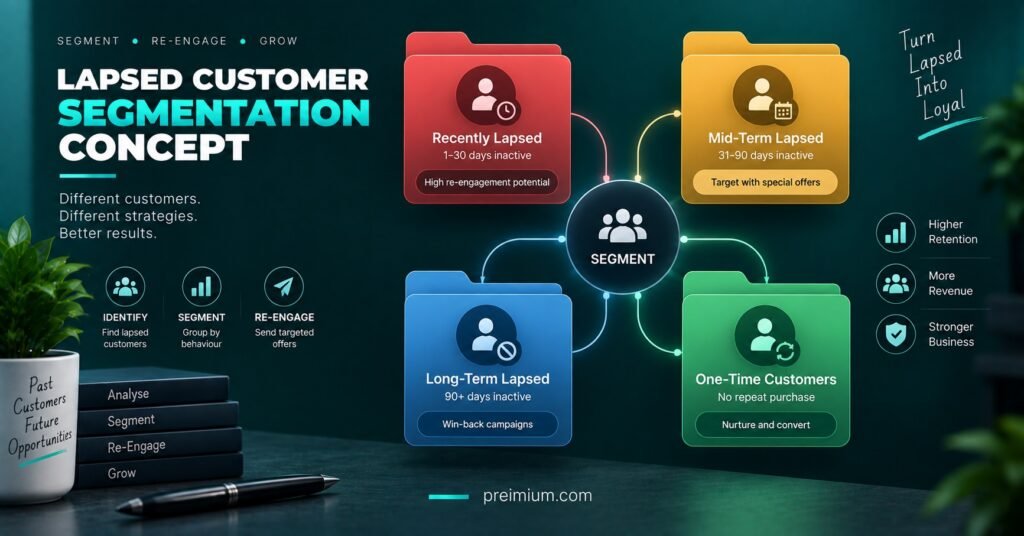
IPTV Reseller Win-Back Campaign Timing That Matches How People Actually Lapse
Timing matters more than most resellers give it credit for. A message sent within the first two weeks of cancellation lands differently from one sent three months later, because the customer’s mental state has moved on.
In the first fifteen days, most lapsed customers still remember exactly why they left and haven’t replaced the service with anything else. This is the window for a direct, low-pressure message that addresses the specific problem if one is known, or simply checks whether everything is working correctly.
Between roughly thirty and sixty days, the customer has likely settled into life without the service or started looking at alternatives. A generic nudge rarely works here. This is where a slightly stronger offer, tied to the reason they left where you know it, tends to perform better.
Past ninety days, expectations reset again. The customer may have forgotten most of the specifics and formed a general impression rather than a detailed memory. A fresh, simple message often outperforms one that references old details they’ve stopped thinking about.
Choosing Between WhatsApp, Email And SMS For The First Message
Channel choice depends on how the customer originally communicated with you, not on which channel feels most professional. A customer who only ever messaged through WhatsApp is unlikely to read an email sitting in a folder they rarely open, no matter how well written it is.
WhatsApp tends to work best for shorter, more personal check-ins, particularly with customers who had an unresolved technical issue, since it allows a quick back-and-forth if they reply with a question. Email suits a slightly longer explanation, such as confirming that a known fault has been fixed and outlining what changed. SMS works well as a short, time-limited nudge close to a specific date, but it’s a poor fit for anything requiring explanation.
Pro tip: If you’re unsure which channel a lapsed customer prefers, check which one they used most recently before cancelling rather than defaulting to whichever channel is easiest for you to send from.
What The Offer Should Actually Look Like
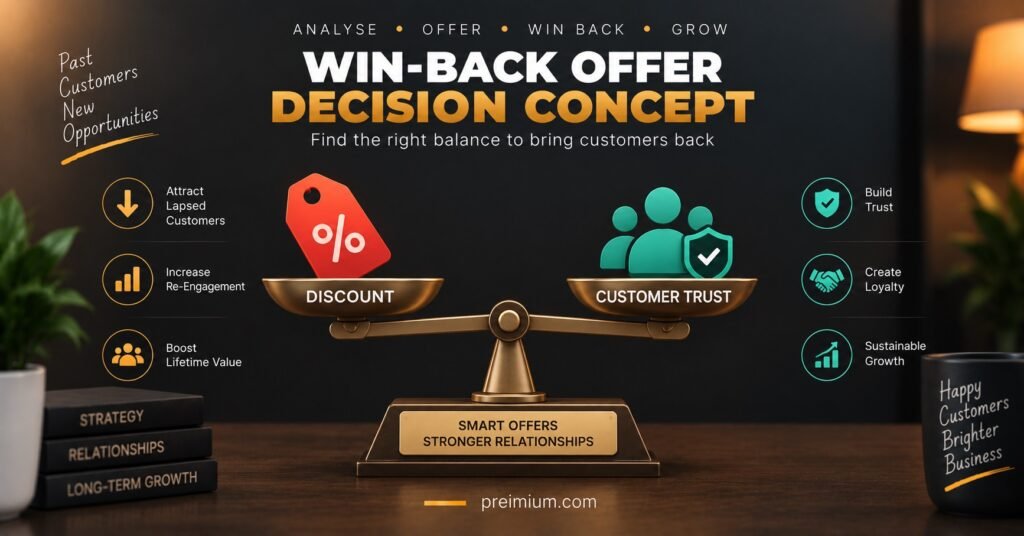
Not every win-back message needs a discount attached. For customers who left simply because they forgot to renew, a plain reminder often works better than an offer, because introducing a discount can make them wonder whether something was wrong with the service in the first place.
Where an offer does make sense, tie its size to what the customer was actually worth to you rather than a round number picked at random. Anyone who has worked through IPTV Customer Lifetime Value for IPTV Panel Resellers already has a rough figure for what a typical customer generates over their full subscription life, and that figure is a far better starting point than guessing.
A short free extension, added to the customer’s existing plan once they resubscribe, often works better than a percentage discount for customers who left over a technical fault, since it directly compensates for the time the service didn’t work properly rather than simply cutting the price of something they weren’t sure they trusted.
Mistakes That Quietly Sink A Win-Back Attempt
Sending the same message to the entire lapsed list at once is the most common one, for the reasons already covered above. It treats a diverse group as a single audience and produces a disappointing response rate that then gets blamed on win-back campaigns in general rather than on the approach.
Leading with an apology when nothing actually went wrong is another. If a customer left simply because they moved house or forgot to renew, an unprompted apology can plant doubt about problems that never existed.
Contacting a customer through a channel or number they’ve since abandoned wastes the attempt entirely and can make the account records look worse than they are, since a message that bounces or goes unread gets logged as “no response” rather than “wrong channel.”
Running the campaign once and treating it as finished is a subtler mistake. A single message that goes unanswered doesn’t necessarily mean the customer isn’t recoverable, it may simply mean the timing or channel was wrong that particular week.
Knowing Whether The Campaign Actually Worked
Reactivation rate, meaning the share of contacted lapsed customers who resubscribe within a set window, is the number that matters, not open rates or reply counts. A message that gets read by everyone but converts nobody hasn’t achieved anything, however good the engagement numbers look on paper.
It’s worth tracking reactivations against the lapse-reason groupings covered earlier, since this tells you which group responds best to which approach and lets you adjust the next round rather than repeating whatever you did last time regardless of results. A basic log inside your existing customer records, similar to what’s covered in IPTV Reseller CRM UK, is usually enough to track this without needing separate software.
It’s also worth watching how long reactivated customers stay afterwards. A customer who comes back for one month and lapses again almost immediately suggests the underlying issue that caused the first cancellation was never actually fixed, which is a different problem from the win-back message itself.
Frequently Asked Questions
How long should a reseller wait before calling a customer lapsed?
Most IPTV resellers treat an account as lapsed once it passes its renewal date with no payment and no response to a standard reminder, typically within a week or two of the due date, though this can be adjusted based on how the customer normally behaves.
Does a win-back campaign work as well through WhatsApp as email?
It depends on which channel the customer actually used before, not on which one performs better in general. Matching the channel to the customer’s own habits matters more than picking a single default channel for every attempt.
Should the win-back offer be bigger than the original signup discount?
Not necessarily. The offer should reflect the actual reason the customer left and what they’re worth over time, rather than simply outbidding whatever got them to sign up originally.
What percentage of lapsed customers can a reseller realistically expect to recover?
This varies too much by customer base, lapse reasons, and how quickly the campaign runs to state a reliable figure. Tracking your own reactivation rate over a few campaigns gives a far more useful benchmark than an industry-wide number.
Is it worth running a win-back campaign on customers who left because of a payment dispute?
Usually yes, provided the underlying dispute has actually been resolved first. Contacting a customer before addressing the original issue tends to reinforce their reason for leaving rather than overcome it.
Conclusion
An IPTV Reseller Win-Back Campaign only works when it treats lapsed customers as different people with different reasons for leaving, rather than one list waiting for a single discount code. Sort the group first, match the timing and channel to how recently and how they left, and size any offer against what the customer is actually worth rather than a number picked out of habit. Track reactivations properly so the next attempt improves on this one instead of repeating it. Start with whichever lapse-reason group is easiest to identify in your existing records and run a small first attempt before rolling the approach out to the full list.
Win-Back Campaign Checklist
- Sort lapsed accounts by likely reason before writing any message
- Confirm any known technical fault is genuinely fixed before contacting that group
- Match the channel to what the customer used before cancelling
- Adjust tone and offer based on how long ago the account lapsed
- Base any discount or extension on customer lifetime value, not a guessed figure
- Log which lapse-reason group each reactivation came from
- Track how long reactivated customers stay before deciding the campaign worked
- Review results after each round and adjust the next one accordingly